
Heat safety during pregnancy is becoming a bigger topic in 2026 because hotter days, longer warm seasons, and more frequent heat alerts can make everyday pregnancy routines feel harder. A short walk, a commute, a crowded event, or even a warm bedroom at night can suddenly feel more exhausting when your body is already working to support a growing baby.
Pregnancy changes the way your body handles temperature, fluids, circulation, and fatigue. That does not mean you need to be afraid of summer or avoid normal life completely. It means you need a smarter plan. Staying cool, drinking enough fluids, watching symptoms, and knowing when to call your provider can help you feel safer and more prepared.
This guide fits naturally with other E-Pregnant resources, including home blood pressure monitoring in pregnancy, when to schedule your first prenatal visit, and sleep problems during pregnancy. Heat affects all of these areas because dehydration, poor sleep, swelling, dizziness, and blood pressure changes can overlap during pregnancy.
Why Heat Safety During Pregnancy Matters More Than Many Moms Realize
Pregnancy already asks more from your heart, blood vessels, kidneys, lungs, and metabolism. Your body is moving more blood, supporting the placenta, adjusting hormones, and helping your baby grow. When high heat is added to that picture, your body must work harder to cool both you and your developing baby. That is one reason heat safety during pregnancy deserves more attention than a simple “drink water” reminder.
The Centers for Disease Control and Prevention explains that pregnancy can make you more likely to get heat exhaustion, heat stroke, or other heat-related illness sooner than someone who is not pregnant. The CDC also notes that pregnancy can make dehydration more likely, which makes it harder for the body to cool itself through sweating. For official guidance, readers can visit the CDC’s page on heat and pregnancy.
How pregnancy changes your response to hot weather
During pregnancy, your body temperature can feel harder to manage. You may sweat more, feel flushed faster, or become tired after activities that used to feel easy. Nausea, food aversions, heartburn, swelling, and poor sleep can also make hydration and recovery harder. If you are in the first trimester and already dealing with fatigue or nausea, heat may make those symptoms feel worse. For more context, you can read first trimester pregnancy symptoms.
Heat can also affect your routine. You may skip meals because you feel too warm, drink less because you feel nauseated, or sleep poorly because your room is uncomfortable. These small things add up. A good heat plan is not about perfection. It is about noticing patterns early and adjusting before you feel truly unwell.
Dehydration can happen faster than expected
Dehydration is one of the biggest reasons hot weather can become a problem. If you are sweating, urinating less, feeling dizzy, getting headaches, or noticing darker urine, your body may be asking for more fluids. Some pregnant moms also notice more Braxton Hicks contractions when they are dehydrated or overheated. If contractions, cramping, dizziness, or weakness show up after heat exposure, it is worth taking seriously.
Heat can make sleep and swelling worse
Warm nights can make pregnancy sleep even more frustrating. You may wake up sweaty, thirsty, restless, or uncomfortable. Poor sleep can then make the next hot day feel harder. Heat can also make swelling in the feet and ankles feel more noticeable, especially after standing or sitting for long periods. If sleep is already difficult, revisit E-Pregnant’s guide on restful nights in every trimester.
Everyday situations that can increase heat risk
Heat risk is not limited to beach days or outdoor workouts. A hot car, a long line outside, a crowded public event, a warm kitchen, a poorly ventilated workplace, or a home without reliable cooling can all matter. Even indoor heat can build up during extreme weather, especially if windows, fans, or air conditioning are not enough.
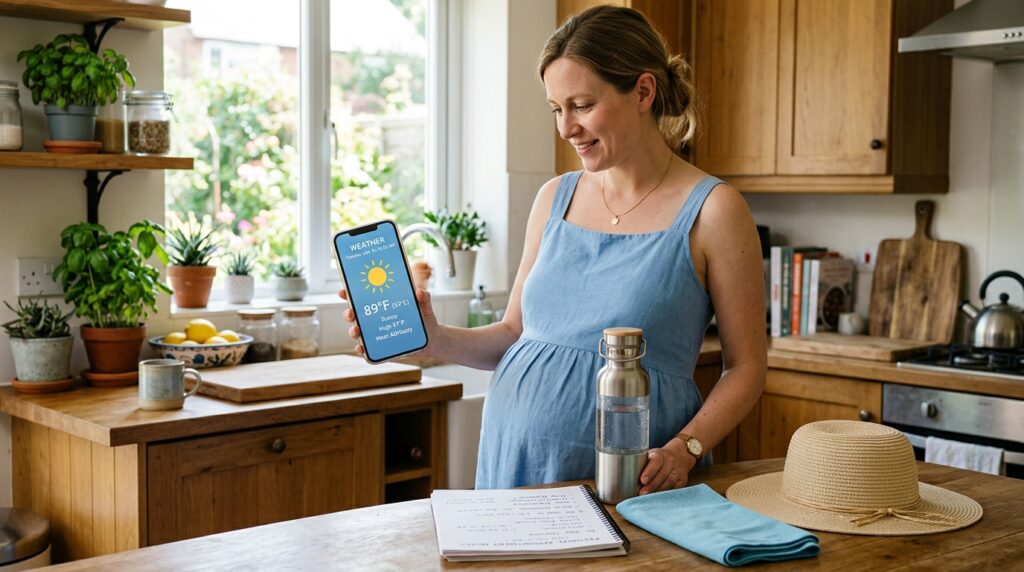
This is why heat safety during pregnancy should be practical. Check the weather before leaving home. Plan errands earlier in the morning or later in the day. Keep water nearby. Dress in breathable layers. Avoid sitting in parked cars. Take breaks before you feel exhausted. If you use a smartwatch or phone app to track steps, remember that pregnancy is not the time to force a goal during dangerous heat. For a balanced view of tracking, see smartwatches in pregnancy in 2026.
Outdoor errands, exercise, and commuting need a plan
If you need to go outside, choose shade when possible, carry water, and give yourself permission to move slowly. Avoid strenuous activity during the hottest part of the day. If you exercise during pregnancy, ask your provider what is appropriate for your stage, symptoms, and health history. Gentle walking may be fine for many moms, but heat changes the equation. Your body’s warning signs matter more than a step count or fitness plan.
Practical Heat Safety During Pregnancy: What to Do and When to Call
A strong heat plan has three parts: prevent overheating, recognize symptoms early, and know when to ask for medical help. This does not need to be complicated. The goal is to make safe choices easier before you are tired, dizzy, nauseated, or overwhelmed.
Start with hydration. Keep a water bottle where you can see it. Sip regularly instead of waiting until you feel very thirsty. Add hydrating foods like fruit, soups, yogurt, smoothies, or water-rich snacks if they sit well with your stomach. If nausea makes water difficult, ask your provider about safe options. E-Pregnant’s guide on nutrition myths in pregnancy can also help you avoid panic-based food advice.
A simple cooling checklist for hot days
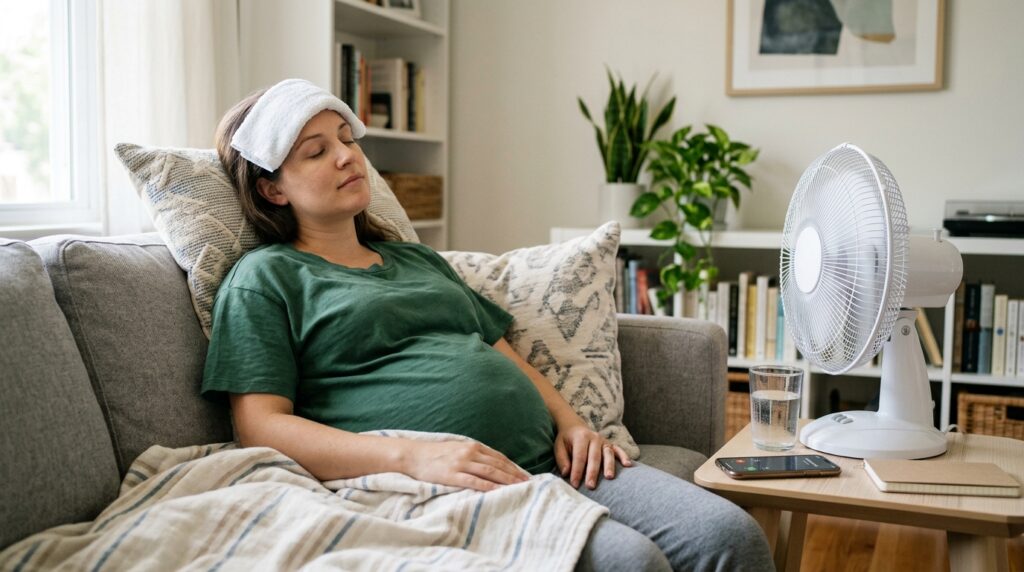
Before a hot day, check the forecast and plan your schedule around the safest times. Wear loose, light, breathable clothing. Use shade, air conditioning, cool showers, damp cloths, or a spray bottle to help your body cool down. If your home is too hot, consider whether you can spend part of the day in a cooler place, such as a library, mall, community center, clinic waiting area, or trusted family member’s home.
Pay attention to how you feel, not just the temperature number. Heavy sweating, headache, nausea, dizziness, muscle cramps, weakness, vomiting, fast heartbeat, confusion, faintness, or contractions after heat exposure are not symptoms to ignore. Rest in a cooler place, drink fluids if you can, and contact your provider if symptoms worry you, do not improve, or are paired with pregnancy warning signs.
Warning signs that deserve extra attention
Call your provider or seek urgent care right away if you feel faint, confused, severely weak, short of breath, or unable to keep fluids down. Also call if you have regular contractions, severe headache, vision changes, chest pain, heavy bleeding, severe abdominal pain, or decreased fetal movement later in pregnancy. Do not wait for a wearable device, online forum, or symptom checker to decide for you. Real symptoms matter more than any app.
If you are monitoring blood pressure at home, heat can make the picture more confusing because dehydration, stress, and discomfort may affect how you feel. If you have been advised to track blood pressure, follow your provider’s instructions and read home blood pressure monitoring in pregnancy for a helpful overview.
In the end, heat safety during pregnancy is about staying ahead of the problem. Do not wait until you feel awful to cool down. Plan your day, hydrate early, rest often, and treat symptoms with respect. If something feels wrong, call your prenatal provider. Pregnancy already comes with enough uncertainty. A simple heat plan can give you more control, more comfort, and more confidence during warm weather.
Medical disclaimer: This article is for educational purposes only and is not a substitute for personal medical advice. Always contact your prenatal care provider about symptoms, medication questions, heat illness concerns, contractions, decreased fetal movement, or anything that feels unusual for your pregnancy.