
Measles and pregnancy is becoming a bigger topic in 2026 because measles cases and outbreaks are getting more attention again. For many expecting moms, that can feel confusing. You may hear about outbreaks on the news, then wonder what it means for your prenatal care, family gatherings, travel plans, older children, or vaccine history.
The good news is that you do not need to panic. You do need clear information. Measles spreads easily, so pregnant moms should know their immunity status, understand exposure steps, and ask their provider what applies to their pregnancy. This is especially important because the MMR vaccine is not routinely given during pregnancy.
This article does not replace medical advice. Your OB-GYN, midwife, clinic, or local health department should guide your personal care. Still, a calm checklist can help you ask better questions and avoid guessing from social media posts.
This guide explains why measles and pregnancy matters in 2026, what symptoms deserve attention, how MMR timing works, and what practical prevention steps expecting moms can discuss with their provider.
Why Measles and Pregnancy Is Trending in 2026
Measles is one of the most contagious infections people can catch. It spreads through the air when an infected person breathes, coughs, or sneezes. A person can also spread measles before the rash appears, which makes outbreaks harder to control.
In 2026, this topic matters because more communities are dealing with measles activity. Travel, large gatherings, school exposures, and lower vaccination rates can all raise concern. Pregnant people may feel especially uncertain because the vaccine conversation is different during pregnancy.
The CDC’s measles cases and outbreaks page tracks current U.S. case numbers. It is a useful source when readers want updated public-health context instead of rumors or screenshots.
Why Measles Spreads So Easily
Measles often starts with symptoms that look like many other illnesses. A person may develop fever, cough, runny nose, red or watery eyes, and tiredness. A rash usually appears later. Because early symptoms can seem ordinary, people may not realize they were around someone contagious.
This creates a problem for pregnant moms. You may attend a family event, clinic visit, school function, airport, or crowded indoor space before anyone knows an exposure happened. If you later hear about a measles case, you may need to call your provider quickly.
Do not try to diagnose yourself from a rash photo online. Call your healthcare provider and explain the possible exposure, symptoms, pregnancy week, and vaccination history if you know it.
Pregnancy Changes the Conversation
Pregnancy changes how your care team thinks about infections. Your body is already working harder to support circulation, breathing, immune changes, and your growing baby. That does not mean every exposure becomes an emergency. It does mean you should not ignore it.
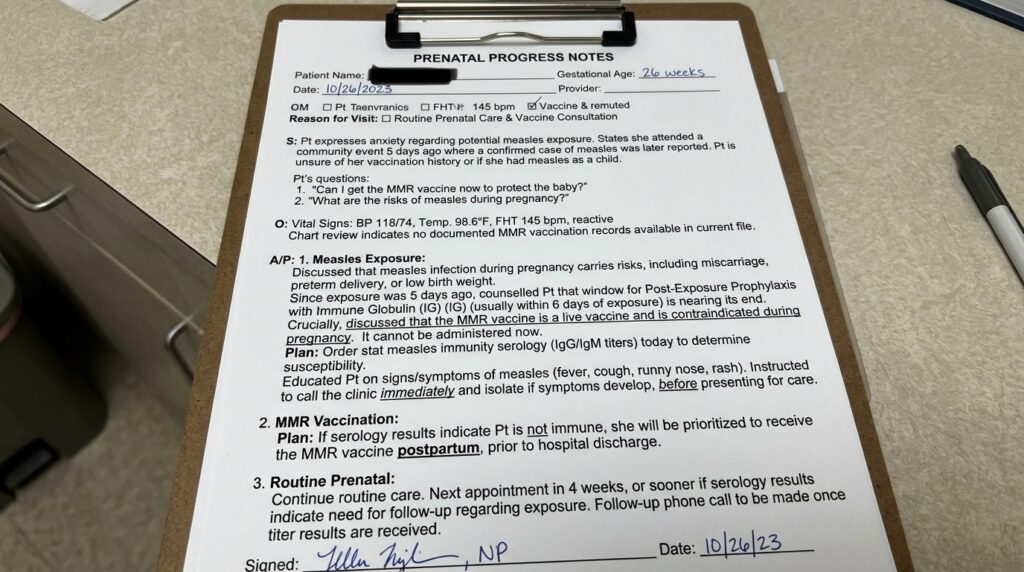
If you think you were exposed to measles, call your prenatal provider before walking into a clinic. This helps protect other pregnant patients, newborns, children, and people with weakened immune systems. Your provider can tell you where to go and what to do next.
MMR Vaccine Timing Matters
The MMR vaccine protects against measles, mumps, and rubella. It is a live vaccine, so it is not routinely given during pregnancy. The CDC says people who are pregnant should wait until after pregnancy to receive MMR and should avoid getting pregnant for at least one month after receiving it.
This is why planning matters. If you are trying to conceive, ask your provider whether your vaccine records show immunity. If you are already pregnant, ask whether your records show past MMR vaccination or lab evidence of immunity. Do not get an MMR vaccine during pregnancy unless your own provider gives specific guidance for an unusual situation.
What to Do If You Think You Were Exposed
A possible measles exposure can feel scary, but the first step is simple: call. Contact your prenatal provider, clinic, or local health department. Tell them when the exposure happened, where it happened, whether you have symptoms, and whether you know your MMR history.
Your provider may ask about your vaccine records, prior blood work, and symptoms. Some pregnant people already have documented immunity from past vaccination or previous infection. Others may not know their status. If you do not know, say that clearly.
If you have fever, cough, rash, red eyes, or feel very unwell, mention those symptoms right away. Your provider may give instructions that help prevent exposing others. Follow those instructions instead of showing up without warning.
Call Before You Go In
Calling first matters. Measles can spread in waiting rooms, hallways, elevators, and clinics. Your care team may use a separate entrance, appointment time, mask instructions, or testing plan if they think measles is possible.
Write down the details before you call. Include your pregnancy week, due date, exposure date, symptoms, vaccine history, and any high-risk contacts at home. If you already use a pregnancy calendar, add the exposure date there too.
A Calm Prevention Checklist for Expecting Moms

Measles and pregnancy prevention starts with knowing what you can control. You cannot control every outbreak or every public space. You can control your questions, records, travel planning, and household protection steps.
Start by checking your records. Look for childhood vaccine documents, school vaccine records, military records, immigration records, prior blood tests, or old medical portals. If you cannot find them, ask your provider whether testing for immunity makes sense for you.
Next, talk about travel. If you plan to fly, attend a large event, visit an outbreak area, or travel internationally, bring it up during your prenatal visit. Your provider can help you weigh timing, risk, symptoms to watch for, and what to do if an exposure alert appears.
This topic connects well with e-Pregnant’s pregnancy vaccine checklist for 2026. That guide covers vaccines commonly discussed during pregnancy, while this article focuses on the special issue of MMR timing.
Questions to Ask at Your Prenatal Visit
Bring simple questions to your next appointment. Ask if your records show measles immunity. Ask what to do if you get an exposure notice. Ask whether your partner, children, or close household members should check their own vaccine status.
You can also ask how measles symptoms may overlap with other pregnancy symptoms. Fever, fatigue, and feeling unwell can happen for many reasons. A provider can help you decide when symptoms need urgent attention.
If you are early in pregnancy, this topic also connects with when to schedule your first prenatal visit. Early care helps you review vaccine history, medications, symptoms, and personal risks before problems feel urgent.
If symptoms make you unsure what is normal, read first trimester pregnancy symptoms. That post can help readers separate everyday early pregnancy discomfort from symptoms they should report.
Plan Postpartum and Family Protection
If you are not immune and cannot receive MMR during pregnancy, ask about postpartum vaccination. Many providers discuss MMR after delivery for patients who need it. Breastfeeding usually does not prevent MMR vaccination, but your own provider should confirm your plan.
Household protection also matters. Babies are too young for routine MMR at birth. That means parents, siblings, caregivers, and close contacts can help protect the baby by staying up to date with recommended vaccines. Ask your pediatrician and prenatal provider what your family should review before delivery.
For a broader pregnancy timeline, you can link readers to Week-by-Week Pregnancy Journey. It gives moms a helpful way to place health decisions into each trimester. For trusted outside guidance, readers can review the CDC’s measles vaccination page, the CDC’s guidelines for vaccinating pregnant women, and ACOG’s measles outbreak guidance for obstetric patients.
Final thought: Measles and pregnancy can feel stressful because the stakes involve both mom and baby. The best response is not panic. It is preparation. Check your records, ask about immunity, call your provider after possible exposure, avoid walking into clinics without warning if symptoms appear, and plan postpartum vaccination if needed. Clear steps can help you feel safer, calmer, and more prepared during an outbreak year.
Medical disclaimer: This article is for educational purposes only and does not replace personal medical advice. Always contact your prenatal care provider, urgent care, emergency services, or your local health department for symptoms, exposure concerns, vaccination questions, or anything that feels unusual during pregnancy.