GLP-1 pregnancy planning is becoming a bigger topic in 2026 because many women now use medications like semaglutide or tirzepatide before they start trying to conceive. Some take these medicines for type 2 diabetes. Others use them for weight management, insulin resistance, PCOS-related concerns, or metabolic health. As these medications become more common, more moms are asking the same honest question: “What should I do if I want to get pregnant?”
The answer is not something to guess from social media. GLP-1 medications affect appetite, digestion, blood sugar, and weight. Those same areas also matter before and during pregnancy. Because of that, you should talk with your healthcare provider before stopping, starting, or changing any medication. This is especially important if you use a GLP-1 medicine for diabetes, because uncontrolled blood sugar can also create pregnancy risks.
For many moms, the confusing part is timing. You may hear about “Ozempic babies,” improved cycles after weight loss, surprise pregnancies, or warnings about stopping medication before conception. Some of that discussion has a real medical reason behind it, but online advice can easily become too simple. GLP-1 pregnancy planning should focus on safety, timing, nutrition, cycle tracking, and a clear plan with your provider.
If you are still in the early planning stage, e-Pregnant’s Trimester Zero preconception checklist is a helpful place to start. This guide goes deeper into GLP-1 medication questions so you can prepare for your next appointment with better clarity.
Why GLP-1 Pregnancy Planning Matters Before Conception
GLP-1 medicines can change the months before pregnancy in several ways. Some women lose weight, improve blood sugar, or notice more regular cycles. When cycles become more predictable, ovulation may also become easier to identify. That can be helpful for people trying to conceive, but it can also lead to an unexpected pregnancy if someone assumes conception is unlikely.
Planning ahead matters because early pregnancy starts before many people know they are pregnant. By the time a test turns positive, the embryo has already begun important early development. That is why preconception care focuses on medication review, folic acid, nutrition, chronic condition management, and realistic timing.
GLP-1 pregnancy planning should start before the positive test
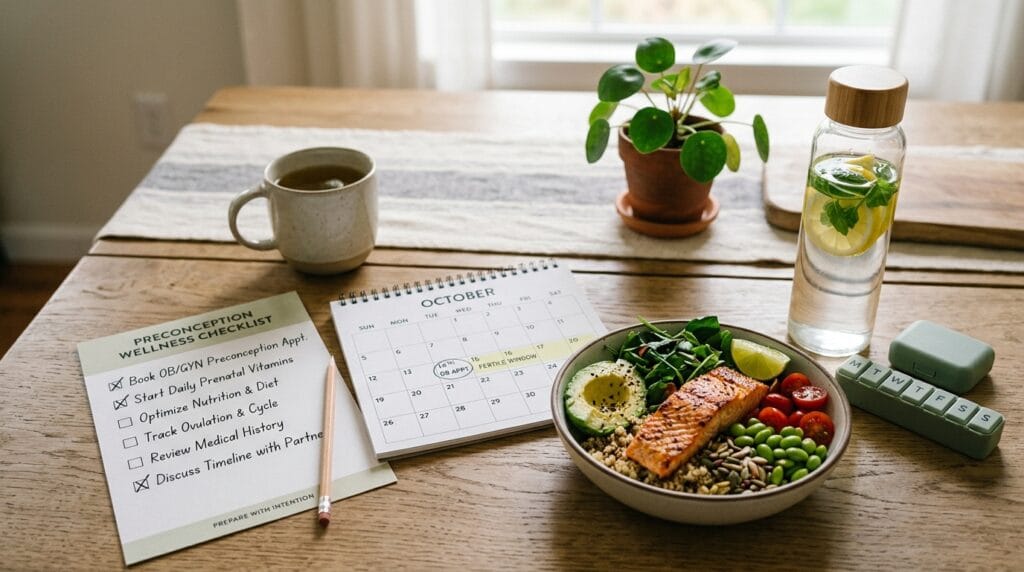
The safest time to ask about GLP-1 medication is before trying to conceive. A preconception appointment gives your provider a chance to review your medication, dose, health history, blood sugar control, weight changes, cycle pattern, and pregnancy goals. This visit can also help you avoid sudden decisions that may affect your health.
Official medication information matters here. Some semaglutide product labels recommend stopping before a planned pregnancy because the medication stays in the body for weeks. For example, MotherToBaby explains that product labels for Ozempic, Wegovy, and Rybelsus recommend stopping semaglutide two months before pregnancy. You can review their fact sheet here: MotherToBaby: Semaglutide Fact Sheet.
Do not stop diabetes medication without medical guidance
If you take a GLP-1 medicine for type 2 diabetes, do not stop it suddenly without a plan. Pregnancy requires careful blood sugar management, and high blood sugar can create risks for both mother and baby. Your provider may suggest another medication, closer monitoring, nutrition changes, or a different timeline before you start trying.
The goal is not panic. The goal is a safer transition. Bring your medication list to your appointment, including prescriptions, supplements, herbal products, vitamins, and over-the-counter medicines. Your provider can help decide what needs to change and what should stay in place.
Why surprise pregnancies can happen while using GLP-1 medications
Some women report becoming pregnant after starting GLP-1 medication, even when pregnancy was not expected. Several factors may contribute. Weight loss can sometimes improve ovulation in people with irregular cycles. Better blood sugar control may also support hormonal balance. In addition, nausea, vomiting, or delayed stomach emptying may raise questions about how well some oral medications work for certain people.
This does not mean GLP-1 medication is a fertility treatment. It also does not mean everyone will become more fertile. Bodies respond differently. Still, if you do not want to get pregnant while using a GLP-1 medicine, ask your provider what contraception method makes sense for you.
Cycle tracking helps, but it is not birth control
Tracking your period can help you notice patterns, especially if your cycles were irregular before weight loss. However, cycle tracking alone may not prevent pregnancy. Apps can estimate fertile windows, but they cannot guarantee ovulation timing. Stress, illness, travel, breastfeeding, PCOS, thyroid issues, and medication changes can all affect cycles.
If you want pregnancy soon, cycle tracking can help you understand your body. If you want to avoid pregnancy for now, talk with your provider about reliable contraception while you finish your medication plan.
How To Prepare Safely If You Used GLP-1 Medication
A strong GLP-1 pregnancy planning approach should include more than stopping a medication. Your body may need time to adjust after appetite changes, weight changes, nausea, constipation, or reduced food intake. Pregnancy needs steady nutrition, enough calories, and key nutrients like folic acid, iron, iodine, vitamin D, calcium, protein, and omega-3 fats.
This is also the right time to talk about weight goals in a healthier way. Pregnancy is not the season for crash dieting. If you recently lost weight, your provider can help you focus on stable habits instead of restriction. e-Pregnant also has a helpful guide on nutrition myths in pregnancy if food advice already feels overwhelming.
What to ask your provider before trying to conceive

Before you start trying, prepare a simple list of questions. Ask when you should stop your GLP-1 medication, whether you need blood work, how to manage blood sugar, and what signs should prompt a call. If you have PCOS, prediabetes, diabetes, thyroid disease, high blood pressure, or a history of pregnancy loss, mention that early.
You can also ask whether your prenatal vitamin fits your needs. Most people need folic acid before conception, but some may need added iron, vitamin D, iodine, or other support. Your provider can guide you based on your health history and lab results.
Watch for nutrition gaps after appetite changes
GLP-1 medicines can reduce appetite. That effect may help some people eat smaller portions, but it can also make it easier to miss important nutrients. If you ate very little for several months, skipped protein, avoided full meals, or struggled with nausea, your provider may want to check for deficiencies before pregnancy.
Focus on consistent meals with protein, fiber, healthy fats, fruits, vegetables, and whole grains. Add iron-rich foods, calcium sources, and low-mercury fish if your provider says fish fits your diet. Hydration also matters, especially if constipation or nausea has been part of your medication experience.
Know what to do if you become pregnant unexpectedly
If you get a positive pregnancy test while taking a GLP-1 medication, contact your healthcare provider as soon as possible. Do not spend days blaming yourself or searching worst-case stories online. Your provider can review the medication, timing, dose, medical reason for use, and next steps.
Bring the exact medication name, dose, injection schedule, and date of your last dose. If you have symptoms like severe vomiting, dehydration, abdominal pain, heavy bleeding, dizziness, or one-sided pelvic pain, seek medical care promptly. For common early symptoms, you can also read e-Pregnant’s guide on first trimester pregnancy symptoms.
GLP-1 pregnancy planning should feel practical, not scary. You are not behind if you need time to adjust your medication plan. You are not failing if your provider recommends waiting before trying. Smart preparation gives your body a better foundation and helps you enter pregnancy with fewer unanswered questions.
The best next step is simple: schedule a preconception conversation, review your medications, start a prenatal vitamin if recommended, and create a clear timeline. Pregnancy planning is not about perfection. It is about making safer, better-informed choices before the first positive test.