

CMV pregnancy questions are becoming more common because many expecting moms have never heard of cytomegalovirus until they are already pregnant. CMV is a common virus. For many healthy adults, it causes mild symptoms or no symptoms at all. The concern during pregnancy is different. If a pregnant person gets CMV, the virus can pass to the developing baby and may cause congenital CMV.
The tricky part is that CMV often spreads through everyday body fluids, especially saliva and urine. That means exposure can happen during normal family life, childcare, toddler kisses, shared cups, utensils, diaper changes, and wiping noses. This does not mean pregnant moms should panic or avoid their children. It means they should understand practical ways to reduce risk.
CMV deserves more attention because it can affect babies even when the pregnant person feels fine. Some babies with congenital CMV look healthy at birth. Others may have signs such as low birth weight, jaundice, rash, small head size, seizures, or eye problems. Hearing loss can also appear later, which is one reason follow-up matters.
This article is for educational purposes only and should not replace medical advice from your OB-GYN, midwife, pediatrician, or health care provider. If you think you had CMV exposure or symptoms during pregnancy, ask your provider what testing or monitoring makes sense for your situation.
Why CMV Pregnancy Awareness Matters in 2026
CMV awareness matters because the virus is common but often overlooked. Many parents know about flu, COVID-19, measles, or food safety during pregnancy. Fewer know about CMV, even though congenital CMV can cause long-term health problems in some babies.
CDC explains that about 1 in 200 babies is born with congenital CMV, and about 1 in 5 babies with congenital CMV will have birth defects or long-term health problems. These may include hearing loss, vision loss, seizures, developmental delay, or other medical concerns. You can review CDC’s overview here: CDC: Cytomegalovirus and Congenital CMV.
That does not mean every CMV exposure causes harm. Many infections do not lead to severe outcomes. Still, awareness helps expecting moms ask better questions, protect themselves in practical ways, and know when to speak with a provider.
Why toddlers and young children are often part of the conversation
Young children can carry CMV and shed the virus in saliva or urine. This matters because pregnant moms, daycare workers, teachers, pediatric health workers, and parents of toddlers may have frequent contact with those fluids. The exposure often happens during normal caregiving, not from something dramatic.
Common examples include sharing food with a toddler, kissing a child on the lips, cleaning pacifiers with your mouth, wiping drool, changing diapers, or handling toys covered in saliva. These moments are normal in family life, but during pregnancy, small habit changes can reduce exposure.
This topic pairs well with e-Pregnant’s first prenatal visit guide. Early prenatal care gives moms a chance to ask about infections, testing, workplace exposure, vaccines, and risk-reduction habits.
You do not need to avoid your child
CMV prevention is not about fear. It is not realistic or healthy to stop hugging your child or caring for them. The goal is to avoid direct contact with saliva and urine when possible. You can still cuddle, read books, play, and show affection.
Instead of kissing a toddler on the lips, kiss the forehead or top of the head. Instead of sharing utensils, use separate spoons and cups. Instead of finishing your child’s leftover food, throw it away. These changes are simple but meaningful.
Handwashing matters after diapers and drool
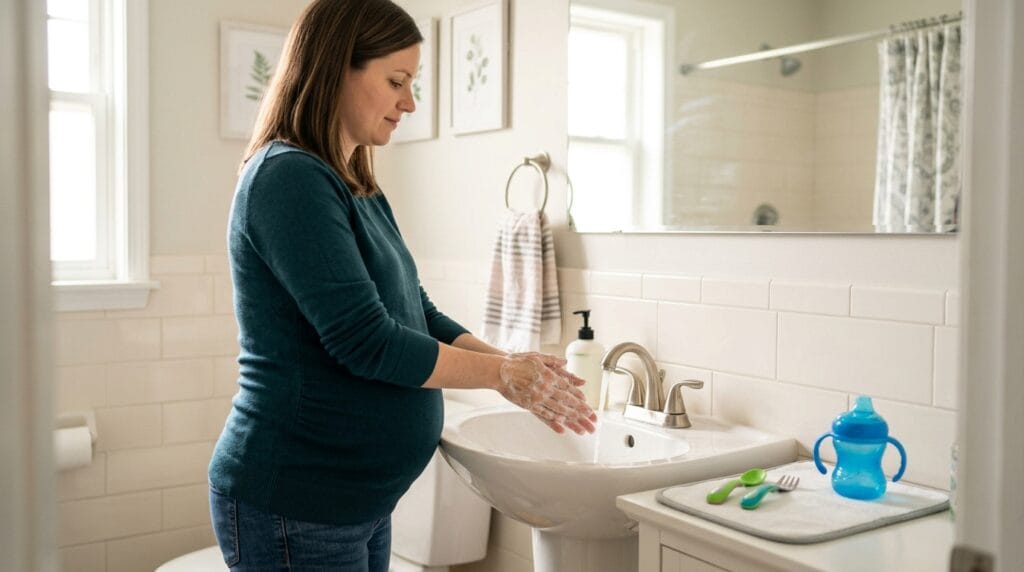
Handwashing is one of the most practical CMV prevention habits. Wash your hands after changing diapers, wiping noses, handling pacifiers, cleaning drool, touching toys that were in a child’s mouth, or helping with potty training.
Use soap and water when available. If you cannot wash right away, use hand sanitizer and wash properly when you can. The goal is not perfection. The goal is repeated, realistic risk reduction.
CMV symptoms can be mild or easy to miss
Many people with CMV have no symptoms. Others may feel like they have a mild viral illness, with fatigue, fever, sore throat, swollen glands, or body aches. These symptoms can overlap with many common infections, so CMV is not always obvious.
If you are pregnant and worried about symptoms or exposure, contact your provider rather than guessing. Your provider may review your symptoms, timing, exposure, ultrasound findings, and whether testing makes sense. Testing decisions can be more complicated than a simple yes or no.
If you are also tracking normal pregnancy changes, e-Pregnant’s pregnancy symptoms guide can help you understand common symptoms while still knowing when to call your provider.
Do not self-diagnose based on symptoms alone
Fatigue and mild illness are common during pregnancy. They do not automatically mean CMV. At the same time, feeling normal does not always rule out infection. That is why provider guidance matters.
If you work around young children or have a toddler at home, tell your provider. They can help you decide whether you need counseling, testing, or only practical prevention steps.
Testing, Newborn Concerns, and Practical Prevention
CMV testing during pregnancy can be confusing. Some patients ask why everyone is not screened. Others only hear about CMV after an ultrasound finding or a known exposure. The answer depends on medical guidelines, test interpretation, timing, and what the results would change.
ACOG describes CMV as the most common congenital infection and notes that most infants with congenital CMV are asymptomatic at birth, although effects can be lifelong. ACOG’s provider FAQ also discusses testing and counseling issues. You can review it here: ACOG: Cytomegalovirus in Pregnancy.
The most useful step for many expecting moms is prevention counseling. If you know how CMV spreads, you can adjust habits without panic. This is especially important for moms with toddlers, childcare exposure, or jobs that involve frequent contact with young children.
What to ask your provider about CMV pregnancy risk
Bring specific questions to your prenatal visit. Ask whether your daily life puts you at higher CMV exposure risk. Mention toddlers, daycare work, teaching, pediatric care work, or household members in childcare. Ask what hygiene habits matter most and whether any testing is appropriate.
If you had a possible exposure or symptoms, ask what the timing means. Some blood tests can be hard to interpret. A result may need follow-up, repeat testing, or specialist input. If ultrasound findings raise concern, your provider may discuss additional monitoring or referral.
CMV also fits naturally with e-Pregnant’s pregnancy vaccines guide. While there is currently no approved vaccine to prevent congenital CMV, infection-prevention conversations are still part of a healthy prenatal care plan. CDC notes that CMV spreads through body fluids and can be passed from a pregnant person to a developing baby.
Newborn testing may need timing
If a provider suspects congenital CMV after birth, testing timing can matter. Parents should ask the baby’s pediatrician what test is needed and when it should happen. Do not wait too long to ask if CMV is a concern.
CDC explains that babies with congenital CMV may show signs at birth such as rash, jaundice, small head size, low birth weight, enlarged liver and spleen, seizures, or eye retina damage. It also notes that some long-term issues, including hearing loss, may appear later.
Hearing follow-up can be important
Some babies with congenital CMV can pass the newborn hearing screen and still develop hearing loss later. That is why families should follow the pediatrician’s guidance on hearing checks and developmental monitoring if congenital CMV is diagnosed or suspected.
If parents notice that a baby does not respond to sounds, startles less than expected, has delayed speech later, or seems to hear inconsistently, they should ask for evaluation. Early hearing support can make a major difference.

CMV pregnancy awareness should not create panic. It should create practical action. Wash your hands after diaper changes and drool contact. Avoid sharing cups, utensils, and food with young children. Kiss toddlers on the head instead of the lips. Ask your provider about your personal risk, especially if you work with children or have a toddler at home.
Most moms cannot avoid every germ, and no prevention habit is perfect. But small daily changes can reduce exposure. If you have concerns about CMV during pregnancy, bring them up early. A clear conversation with your provider can help you understand testing, prevention, and follow-up without unnecessary fear.