

NIPT pregnancy 2026 is one of the most talked-about prenatal screening topics for expecting moms. NIPT stands for noninvasive prenatal testing. It is a blood test that looks at small pieces of pregnancy-related DNA in the mother’s blood to screen for certain chromosome conditions. Many parents hear about it early in pregnancy and wonder whether they should say yes, what the results mean, and whether it replaces other tests.
The first thing to know is simple: NIPT is a screening test, not a diagnostic test. That difference matters. A screening test estimates risk. A diagnostic test can confirm a condition more directly. NIPT can give helpful information, but it should be explained with context, counseling, and follow-up options if results come back high risk or unclear.
This matters even more in 2026 because prenatal testing choices keep expanding. Parents may hear about standard NIPT, expanded screening panels, carrier screening, ultrasound findings, diagnostic testing, and even research on broader fetal sequencing. That can feel empowering, but it can also feel overwhelming.
This guide explains what NIPT can tell you, what it cannot tell you, when it is usually discussed, and what questions to ask before deciding. This article is for educational purposes only and should not replace advice from your OB-GYN, midwife, genetic counselor, or prenatal care provider.
Why NIPT Pregnancy 2026 Is Getting More Attention
NIPT is getting more attention because many parents want earlier information with less risk than invasive testing. Since NIPT uses a blood sample from the pregnant person, it does not involve placing a needle into the uterus. That is one reason many families feel more comfortable starting with it.
At the same time, the popularity of NIPT can make the test sound simpler than it really is. Some parents hear “blood test” and assume the result is a clear yes-or-no answer. In reality, NIPT reports risk. It may say a result is low risk, high risk, or sometimes no result. What comes next depends on the specific finding, ultrasound results, gestational age, family history, and the parent’s values.
ACOG and SMFM explain that all patients should receive counseling about options for fetal chromosomal testing and that all patients have the right to accept or decline screening and diagnostic testing. You can review the professional overview here: ACOG and SMFM guidance on screening for chromosomal abnormalities.
What NIPT usually screens for
NIPT commonly screens for chromosome conditions such as trisomy 21, also known as Down syndrome, trisomy 18, and trisomy 13. Some versions may also screen for sex chromosome differences or selected microdeletions. The exact conditions depend on the lab and the panel ordered.
This is one reason you should not say yes to a test without understanding what is included. A basic panel and an expanded panel are not the same thing. More information is not always better if the result may be uncertain, hard to interpret, or stressful without clear next steps.
If you are still preparing for pregnancy, e-Pregnant’s Trimester Zero checklist is a helpful internal resource. It reminds readers to review family history, medications, supplements, and preconception health before pregnancy when possible.
It is a screening test, not a diagnosis
A low-risk NIPT result can be reassuring, but it does not guarantee that the baby has no health condition. A high-risk result does not automatically mean the baby definitely has that condition. It means the pregnancy has a higher chance of the condition and needs careful follow-up.
Follow-up may include a detailed ultrasound, genetic counseling, or diagnostic testing such as chorionic villus sampling or amniocentesis. Your provider can explain the risks, benefits, timing, and limits of each option.
Timing matters in the first trimester
NIPT is usually discussed early in pregnancy, often around the time first-trimester screening options are reviewed. Many providers offer it after enough pregnancy DNA is expected to be present in the blood sample. Timing can vary by practice and lab.
If you recently had a positive pregnancy test, read When to Schedule Your First Prenatal Visit in 2026. That guide fits naturally with this topic because your first visit is often when testing options, dating, lab work, and early pregnancy questions come up.
How to Understand NIPT Results Without Panic
NIPT results can stir up a lot of emotion. Some parents feel relief. Others feel confusion. Some feel fear when they see words like “high risk,” “positive screen,” or “no result.” The wording can feel scary, especially if no one explains what the numbers mean.
The best approach is to slow down and ask for interpretation. Do not rely only on a patient portal message or a short phone call if the result is unclear. Ask what condition the result refers to, what the estimated risk means, whether the result fits your ultrasound findings, and what follow-up options make sense.
Remember that NIPT does not replace every part of prenatal care. It does not replace anatomy ultrasound, routine lab work, blood pressure monitoring, or conversations about symptoms. It is one tool in a bigger care plan.
What low-risk, high-risk, and no-result may mean
A low-risk result usually means the test did not find a high chance for the conditions screened. This can be reassuring, but it does not screen for every possible birth difference, genetic condition, or pregnancy complication.
A high-risk result means the test found a higher chance for a specific condition. It does not equal a confirmed diagnosis. Your provider may recommend genetic counseling and diagnostic testing if you want confirmation.
A no-result or inconclusive result can happen for several reasons. Sometimes there is not enough fetal fraction, which means not enough pregnancy-related DNA was available in the sample. Other factors may also affect results. Your provider may suggest repeating the test, reviewing timing, checking ultrasound findings, or discussing other testing options.

If early pregnancy symptoms are adding stress while you wait for appointments or results, e-Pregnant’s pregnancy symptoms guide can help readers separate common first-trimester changes from symptoms that deserve a call to a provider.
A low-risk result is reassuring but not complete
Low risk can be good news, but it should not make you skip the rest of prenatal care. Ultrasounds still matter. Your anatomy scan still matters. Your provider still needs to monitor your health, baby’s growth, and any symptoms that develop.
Think of NIPT as one piece of the puzzle. It can answer some questions well, but it cannot answer every question about the pregnancy.
Questions to ask before saying yes to NIPT
Before choosing NIPT, ask your provider what the test screens for, what it does not screen for, when you should take it, how long results usually take, and what happens if the result is high risk or inconclusive. Also ask whether your insurance covers the test and whether the lab offers a self-pay price.
It is also fair to ask how you want to use the information. Some parents want early information so they can prepare. Some want time to meet specialists. Some want to know whether diagnostic testing should be considered. Others may decide they do not want screening. Informed choice means your decision should match your values, not someone else’s pressure.
For a broader pregnancy timeline, link readers to Week-by-Week Pregnancy Journey. It helps parents see how early screening fits into the full pregnancy path.
Cost, privacy, and emotional readiness matter
NIPT decisions are not only medical. They can also involve cost, insurance coverage, privacy questions, and emotional readiness. A test can provide useful information, but it can also create anxiety if the result is uncertain or if parents do not know what they would do next.
Ask who receives the result, how the lab handles data, what your out-of-pocket cost may be, and whether genetic counseling is available. You deserve clear answers before and after testing.
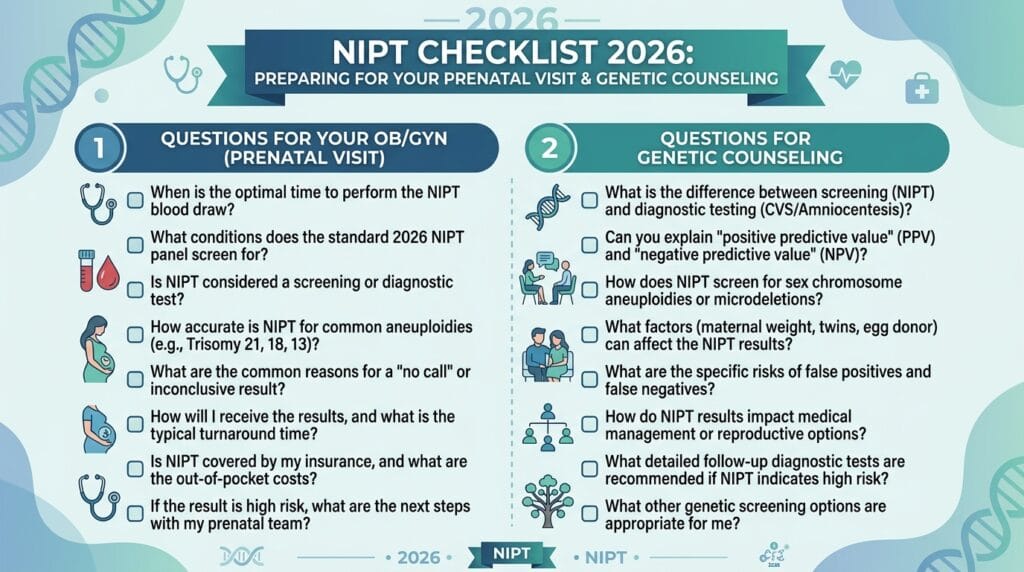

NIPT pregnancy 2026 is useful because it can give earlier information about certain chromosome conditions, but it should never be presented as a perfect answer. It is a screening tool that works best when paired with counseling, ultrasound care, and thoughtful follow-up.
If your provider offers NIPT, take time to ask what the test includes, what the results may mean, what happens next, and how the choice fits your pregnancy goals. The right decision is not the one that sounds most advanced. The right decision is the one you understand and feel prepared to make.