

The first prenatal visit 2026 can feel exciting, emotional, and stressful at the same time. You may have a positive pregnancy test, new symptoms, and a long list of questions. Then you call a clinic and hear that the next appointment is weeks away. That delay can make an already overwhelming moment feel even harder.
Many pregnant people now face booked-out offices, insurance issues, provider shortages, transportation problems, or confusion about where to start. However, a delay does not mean you should wait silently. You can take practical steps while you look for care. You can also prepare better questions for the appointment when it finally happens.
Early prenatal care matters because it helps confirm the pregnancy, estimate the due date, review health history, check risk factors, discuss symptoms, and plan testing. It also gives you a chance to ask about nutrition, medications, vaccines, warning signs, mental health, and next steps.
This guide explains what to ask at your first prenatal visit 2026, especially if care is delayed, booked out, or hard to access. It also offers simple preparation tips for the days or weeks before your first appointment. This article is for education only and does not replace medical advice from a doctor, midwife, nurse, or qualified healthcare professional.
Why the First Prenatal Visit 2026 Matters So Much
The first prenatal visit sets the foundation for the rest of pregnancy care. During this visit, your provider may review your last menstrual period, estimate your due date, confirm pregnancy details, ask about your medical history, and discuss symptoms. They may also order lab work, review medications, talk about supplements, and decide whether you need an ultrasound.
This appointment also helps identify health concerns early. For example, high blood pressure, diabetes, thyroid disease, anemia, infections, previous pregnancy complications, and certain medications may need extra attention. The earlier your care team knows about these issues, the better they can help you plan.
If this is your first pregnancy, the visit may feel like a lot of information. That is normal. You do not need to know everything before you arrive. Still, it helps to bring notes. e-Pregnant’s week-by-week pregnancy journey can help you understand where you are in pregnancy and what may come next.
What Usually Happens at the First Appointment
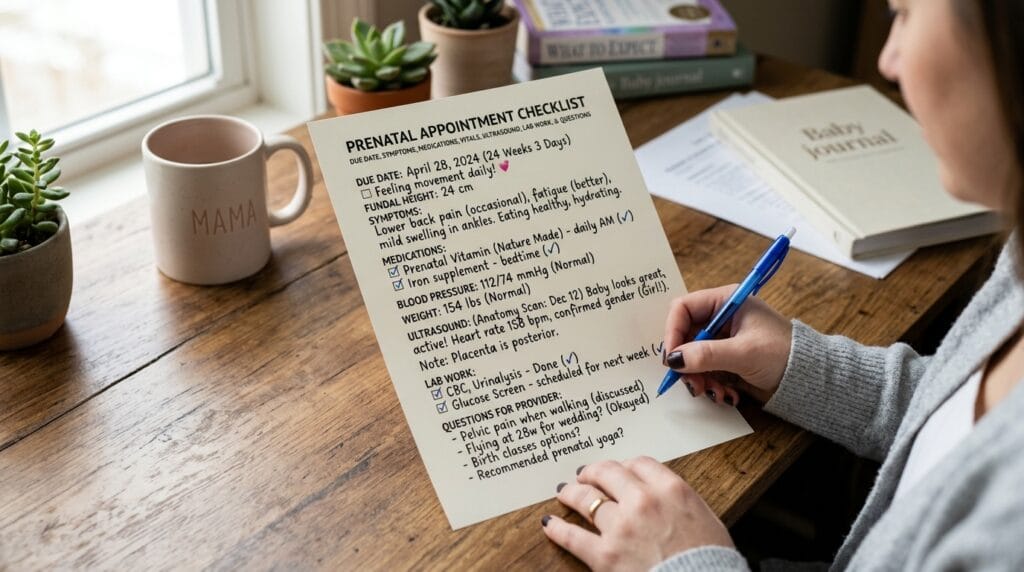
Every clinic works a little differently, but most first visits cover similar topics. Your provider may ask the first day of your last period, your cycle length, prior pregnancies, miscarriages, births, surgeries, health conditions, medications, allergies, supplements, family history, and lifestyle factors.
You may also discuss symptoms such as nausea, cramping, spotting, fatigue, breast tenderness, headaches, mood changes, or food aversions. Some symptoms can be common in early pregnancy. Others need attention. Because of that, honest details matter.
Your care team may check blood pressure, weight, and basic health measurements. They may also order blood tests, urine tests, genetic screening options, or ultrasound depending on your pregnancy week and health history. For more general information, you can review the Office on Women’s Health guide to prenatal care and tests.
Bring These Details So the Visit Goes Smoother
Bring the date of your last menstrual period, a list of medications, supplements, allergies, health conditions, past surgeries, and previous pregnancy history. Also bring insurance information, pharmacy details, and questions you do not want to forget.
If you track symptoms in a phone app or notebook, bring that too. Write down bleeding, pain, fever, vomiting, dizziness, headaches, mood changes, or any symptom that worries you. Clear notes help your provider understand what has been happening between the positive test and the appointment.
Ask About Warning Signs Before You Leave
Before the appointment ends, ask what symptoms require a call, same-day care, or emergency care. This is especially important if your next visit will not happen for several weeks.
Ask about heavy bleeding, severe one-sided pain, fainting, chest pain, shortness of breath, severe vomiting, fever, severe headache, vision changes, swelling, or thoughts of self-harm. Also ask where to call after hours. A clear plan can reduce panic later.
What to Do If Prenatal Care Is Delayed or Booked Out
If the clinic gives you an appointment several weeks away, ask whether they have a cancellation list. Then ask whether a nurse can review urgent symptoms by phone. You can also ask whether they offer telehealth for early counseling before the in-person visit.
Next, check whether another provider in the same practice has an earlier opening. Some offices can schedule an intake call before the full appointment. Others may direct you to a different location, hospital-affiliated clinic, community health center, or midwifery practice.
If you have risk factors, say so clearly when booking. Mention previous ectopic pregnancy, miscarriage, high blood pressure, diabetes, kidney disease, autoimmune disease, bleeding, severe pain, fertility treatment, or current medications that may need review. Those details may change appointment priority.
Do Not Wait Quietly If Symptoms Feel Urgent
A booked-out appointment should not stop you from seeking help for urgent symptoms. Call the clinic, an urgent care line, or emergency services if symptoms feel serious. Early pregnancy concerns such as heavy bleeding, severe abdominal pain, fainting, fever, or dehydration deserve prompt attention.
Trust your body. If something feels wrong, ask for guidance. It is better to call and get reassurance than to ignore a symptom that needs care.
Questions to Ask at Your First Prenatal Visit 2026
Good questions can turn a rushed appointment into a useful one. Start with the basics. Ask how far along you are, how the due date was estimated, when you may need an ultrasound, and what tests the provider recommends. Also ask what symptoms are normal and what symptoms need a call.
Then ask about daily health. Which prenatal vitamin should you take? How much folic acid do you need? Should you continue current medications? Are any over-the-counter medicines unsafe? What foods should you avoid? Can you exercise? How much caffeine is okay for you?
Also ask about emotional health. Pregnancy can bring anxiety, sadness, irritability, sleep problems, or fear, especially when care is delayed. e-Pregnant’s article on perinatal mental health screening in 2026 may help you understand why emotional symptoms deserve the same attention as physical symptoms.
Ask About Labs, Supplements, Vaccines, and Follow-Up

Lab work can screen for blood type, anemia, infections, urine concerns, immunity, and other pregnancy-related issues. Ask which tests you need now, which ones come later, and how you will receive results. Also ask who will call if something looks abnormal.
Supplements matter too. Many patients take prenatal vitamins, but some may also need iron, vitamin D, B12, or other support based on their diet and labs. If fatigue feels intense, ask whether anemia or ferritin testing applies. e-Pregnant’s guide on iron deficiency in pregnancy can help you prepare that conversation.
Vaccine timing may also come up. Ask when to discuss flu, COVID-19, Tdap, and RSV if applicable. If you already read e-Pregnant’s pregnancy vaccine guide, bring any questions to the visit so your provider can personalize the timing.
Ask How to Reach the Care Team Between Visits
Before you leave, ask how to contact the clinic. Should you use a patient portal, phone line, nurse line, or urgent number? How long do replies usually take? Who handles lab results? Where should you go after hours?
This small step matters. Many pregnancy worries happen between appointments, not during them. When you know the right contact path, you can act faster and avoid guessing.
The first prenatal visit 2026 should help you feel more informed, not more confused. If care is delayed, use the waiting time wisely. Track symptoms, gather medical details, prepare questions, and ask about earlier options or nurse guidance. If symptoms feel urgent, do not wait for a scheduled visit.
Pregnancy care is a partnership. Your provider brings medical training, but you bring your symptoms, history, questions, and instincts. When both sides communicate clearly, the first visit can become a strong starting point for a healthier, more confident pregnancy.