Wildfire smoke contains fine particles and gases. The smallest particles, called PM2.5, can travel deep into the lungs. Pregnancy-specific public-health guidance recommends taking extra care to reduce smoke exposure. You can read the CDC guidance on wildfire smoke and pregnancy and the EPA’s pregnancy and wildfire-smoke resource for current advice.
How wildfire smoke may affect pregnancy
Breathing smoky air can irritate the eyes, nose, and throat and may cause coughing or breathing discomfort. People with asthma or other lung or heart conditions may need extra care. During pregnancy, limiting unnecessary exposure is a sensible precaution, particularly when local authorities advise sensitive groups to stay indoors or reduce activity outside.
What recent research tells us
A UC Irvine-led study published in 2026 analyzed more than 627,000 California births and examined wildfire-related air pollution exposure during 2017 and 2018. The researchers reported associations between higher wildfire-related PM2.5 and other exposure measures and higher risks of preterm birth and preterm prelabor rupture of membranes. They estimated that roughly 7% of preterm births in that study population might be attributable to elevated wildfire PM2.5 exposure.
These are population-level findings from an observational study. They do not show that smoke exposure caused a particular person’s pregnancy complication, and they cannot tell an individual what will happen after a specific exposure. The study supports practical steps to reduce exposure, not panic or blame. Read the UC Irvine study summary for its methods and findings.
Check air quality and reduce exposure
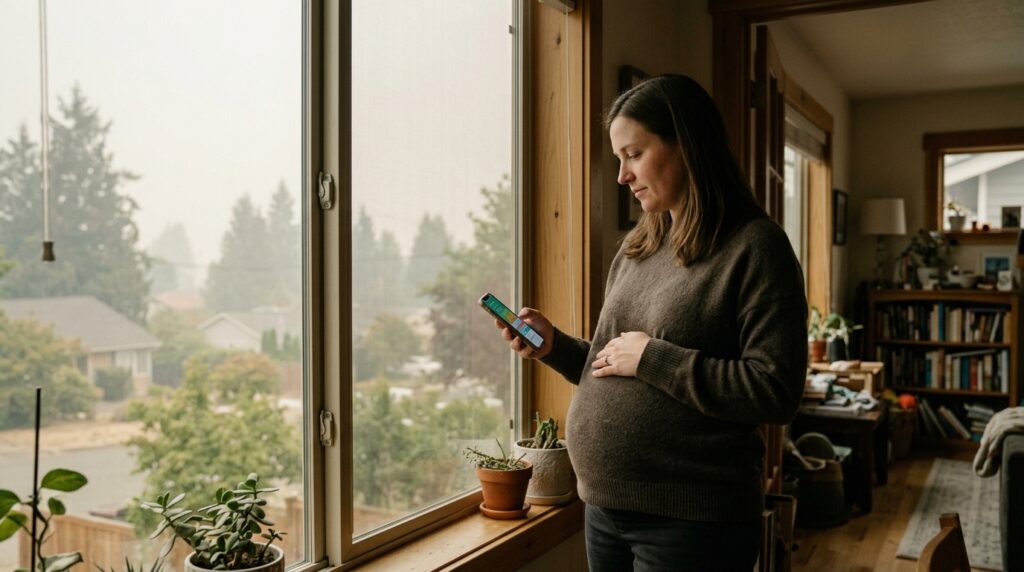
Start with your local Air Quality Index, or AQI, rather than relying only on how the sky looks or smells. The AirNow AQI page provides local air-quality information. Follow local instructions for sensitive groups. When smoke levels are unhealthy, consider postponing outdoor exercise, errands, or other nonessential activities until conditions improve.
Keep indoor air cleaner
When smoke is affecting your area, stay indoors as much as you reasonably can and keep doors and windows closed. If you have central heating or cooling, use it with a clean filter and recirculate indoor air when the system allows. The EPA suggests a MERV 13 filter, or the highest-efficiency filter that your system can safely use. Check the appliance manual or ask an HVAC professional if you are unsure; a filter that is too restrictive can interfere with some systems.
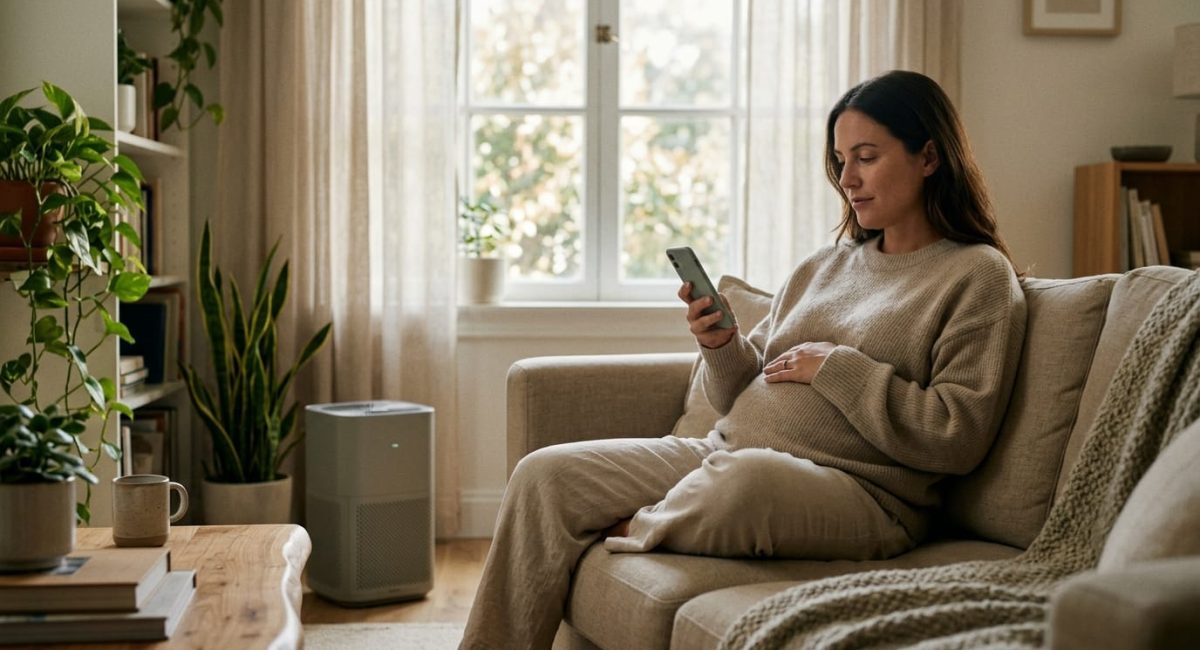
A portable air cleaner sized for the room may also help reduce indoor particles. Choose a model that does not intentionally produce ozone. If you do not have an air cleaner, focus on keeping windows closed and avoiding activities that add indoor pollution. During a smoke event, skip candles and avoid frying or grilling indoors when possible. If outdoor air improves, follow local advice on when it is reasonable to air out your home.

Limit time outdoors when smoke is heavy
If you need to go outside, keep the trip brief and avoid strenuous activity. If public-health guidance advises a respirator, use a well-fitting, NIOSH-approved N95. A properly worn N95 can reduce inhalation of particles, but it does not remove every gas in smoke or make heavily polluted air risk-free. A cloth face covering or loose-fitting mask is not a substitute for a respirator. If you have a condition that affects breathing, ask your clinician what protection is appropriate for you.
Smoke can linger after a fire is contained. Continue checking the AQI and follow evacuation and return-home instructions from local officials. Do not go back into an evacuation area until authorities say it is safe.
Prepare before a wildfire or smoke event
A simple plan can make a fast-moving situation easier to manage. Save your prenatal clinic’s phone number and ask what to do if the office or your usual hospital closes. Identify where you could receive prenatal or delivery care if you need to leave home. If you take prescription medicines or prenatal vitamins, ask your care team how to keep an accessible supply with you.
Keep essential items together, including identification, medical and insurance information, phone chargers, water, and supplies for you and your baby. Plan transport and a place to stay if evacuation becomes necessary. If you go to a shelter, tell staff that you are pregnant so they can help connect you with appropriate support. For help preparing questions and organizing early care, see e-Pregnant’s first prenatal visit guide.

Your plan can include heat as well as smoke. Hot weather may make it harder to stay comfortable indoors with windows closed, so identify a clean-air place with cooling if your home becomes too warm. e-Pregnant’s extreme-heat safety guide covers hydration, heat alerts, and checking air quality before outdoor plans.
Know when to contact your care team
Contact your prenatal care team if smoke exposure is followed by symptoms that worry you, especially persistent coughing, wheezing, or trouble breathing. Follow your clinician’s instructions if you have asthma or another health condition, and do not change prescribed medicines without medical guidance. If breathing problems are severe or rapidly worsening, seek emergency care.
Also know the warning signs your maternity team has told you to watch for, including signs of early labor. If you have contractions, fluid leakage, bleeding, or another urgent pregnancy symptom, call your care team promptly or use the emergency plan they provided. CDC advises pregnant people to know where they can receive care if a clinic or hospital is disrupted and to continue prenatal care when possible.
For general symptom questions, e-Pregnant’s pregnancy symptoms guide is a related resource, but it should not be used to diagnose a problem or delay urgent care.
Wildfire smoke and pregnancy can feel unsettling, but you do not have to manage uncertainty alone. Check local air quality, reduce avoidable exposure, prepare a care and evacuation plan, and contact your healthcare team when symptoms or pregnancy concerns arise. Small practical steps can help you make informed choices while smoke conditions change.
Medical disclaimer: This article is for general educational purposes only and is not a substitute for individualized medical advice, diagnosis, or treatment. Follow local emergency instructions and contact a qualified healthcare professional about your specific situation.