
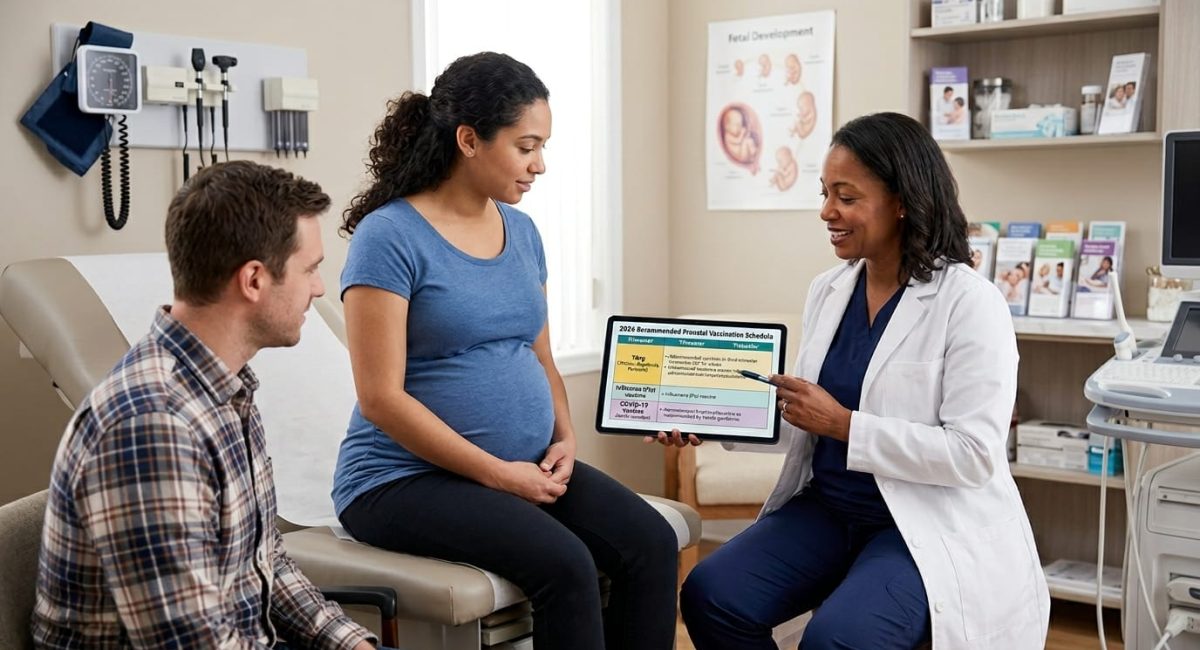
The pregnancy vaccine schedule 2026 can feel confusing, especially when you are already tracking appointments, symptoms, nutrition, baby growth, lab work, and birth plans. Many moms hear about RSV, flu, COVID-19, and Tdap during pregnancy, then wonder which vaccines matter, when they are given, and what questions they should ask at prenatal visits.
The goal is not to memorize medical guidelines by yourself. Instead, the goal is to understand the conversation so you can speak clearly with your healthcare provider. Vaccines during pregnancy may help protect both you and your baby. However, timing matters, your medical history matters, and your provider should help you build a plan that fits your pregnancy.
In 2026, vaccine conversations are especially important because respiratory illnesses continue to affect pregnant people and newborns. Also, more parents are trying to sort through mixed information online. That can make a simple prenatal question feel stressful. A calm, provider-guided plan can reduce confusion.
This guide explains what to ask about the pregnancy vaccine schedule 2026, including RSV, flu, COVID-19, and Tdap. It also shows how vaccine timing may connect with trimester planning, symptoms, and prenatal visits. This article is for educational purposes only and does not replace medical advice from your doctor, midwife, or qualified healthcare professional.
Why the Pregnancy Vaccine Schedule 2026 Deserves Early Attention
Pregnancy changes the body in many ways. Your immune system, lungs, heart, blood volume, and energy demands all shift. Because of these changes, some infections can become more serious during pregnancy. Some illnesses can also affect newborns, especially during the first weeks and months after birth.
That is why prenatal care often includes vaccine planning. Your provider may ask about past vaccines, current season, due date, medical conditions, allergies, previous reactions, and exposure risks. This review helps your care team decide what you may need and when.
If you are early in pregnancy, you may not need every vaccine right away. Still, it helps to ask early. Some vaccines work best during a specific window. Others depend on the season. For example, a person due in winter may discuss timing differently from someone due in summer.
e-Pregnant’s week-by-week pregnancy journey can help you connect vaccine questions with trimester milestones. When you know where you are in pregnancy, it becomes easier to ask better questions at each visit.
Why Timing Matters More Than Guesswork
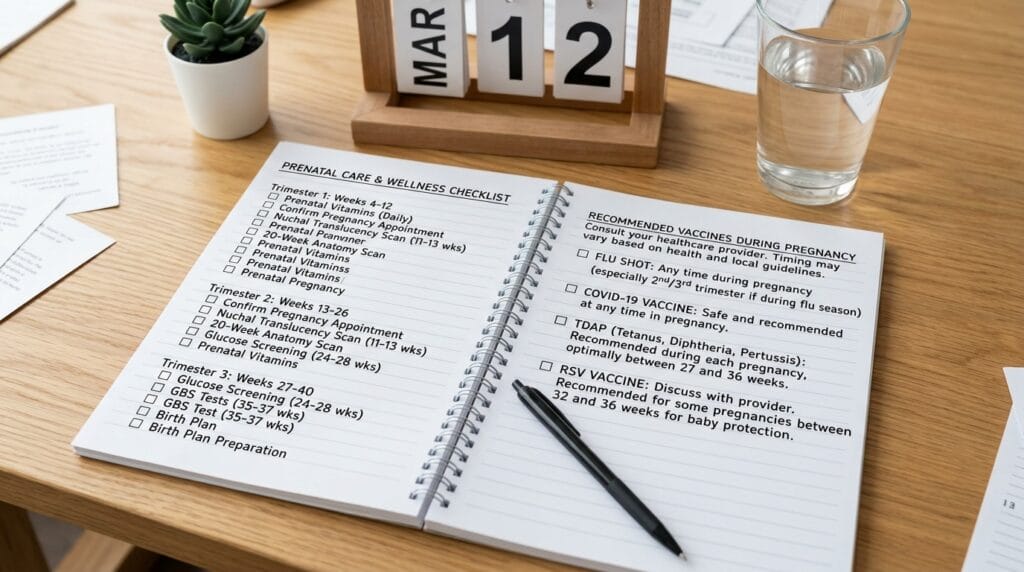
Vaccine timing during pregnancy is not random. Some vaccines aim to protect the pregnant person during a high-risk season. Others help the body pass protective antibodies to the baby before birth. That is why your pregnancy week and due date matter.
You should not try to create your own vaccine schedule from social media posts or old articles. Guidance can change, and your personal health history may affect the plan. Instead, bring your questions to your provider and ask what applies to your pregnancy now.
It also helps to keep a simple prenatal notes list. Write down your current pregnancy week, due date, vaccine history, allergies, prior reactions, chronic conditions, and any medications. This makes the conversation faster and more accurate.
RSV Vaccine Timing Is Usually a Third-Trimester Conversation
RSV is a respiratory virus that can be especially concerning for young infants. During pregnancy, your provider may discuss the RSV vaccine if your pregnancy timing matches the recommended window and season. Many patients hear about RSV late in pregnancy because the vaccine is commonly discussed around weeks 32 through 36 during RSV season.
Ask your provider whether RSV vaccination applies to you, when your best timing would be, and whether your baby may need another preventive option after birth. Also ask which vaccine is approved for pregnancy, because not every RSV product has the same use.
Tdap Has Its Own Pregnancy Window
Tdap helps protect against tetanus, diphtheria, and pertussis. Pertussis, also called whooping cough, can be dangerous for newborns. Because babies are too young for their own full vaccine protection at birth, pregnancy timing can matter.
Your provider may recommend Tdap during each pregnancy, even if you had it before. Ask when you should receive it, whether close family members should also check their vaccine status, and how Tdap fits with your third-trimester appointments.
What to Know About Flu and COVID-19 During Pregnancy
Flu and COVID-19 can affect pregnant people differently than people who are not pregnant. Some pregnant patients face a higher risk of complications, especially if they have asthma, heart conditions, diabetes, obesity, immune concerns, or other medical issues. For that reason, many prenatal care teams discuss seasonal protection early.
Flu vaccination usually depends on flu season. COVID-19 guidance may also depend on current recommendations, vaccine availability, previous doses, and your health history. Because recommendations can update, it is smart to ask your provider directly instead of relying on an old screenshot or a friend’s schedule.
If you feel overwhelmed by fatigue, body aches, nausea, or other symptoms, remember that pregnancy itself can cause many changes. e-Pregnant’s guide on pregnancy symptoms from fatigue to cravings can help you understand common symptoms. However, fever, breathing trouble, dehydration, chest pain, or severe weakness should prompt a call to your provider.
Flu and COVID-19 Questions to Bring to Prenatal Visits
Ask your provider when flu season matters in your area, whether you should get a flu shot during your current trimester, and what side effects you may expect. Also ask what symptoms should lead to a call after vaccination or after possible exposure.
For COVID-19, ask whether you are up to date based on current guidance. Also ask what to do if you test positive during pregnancy, especially if you have risk factors. A clear plan can help you act quickly instead of panicking later.
How to Prepare for a Vaccine Conversation During Prenatal Care
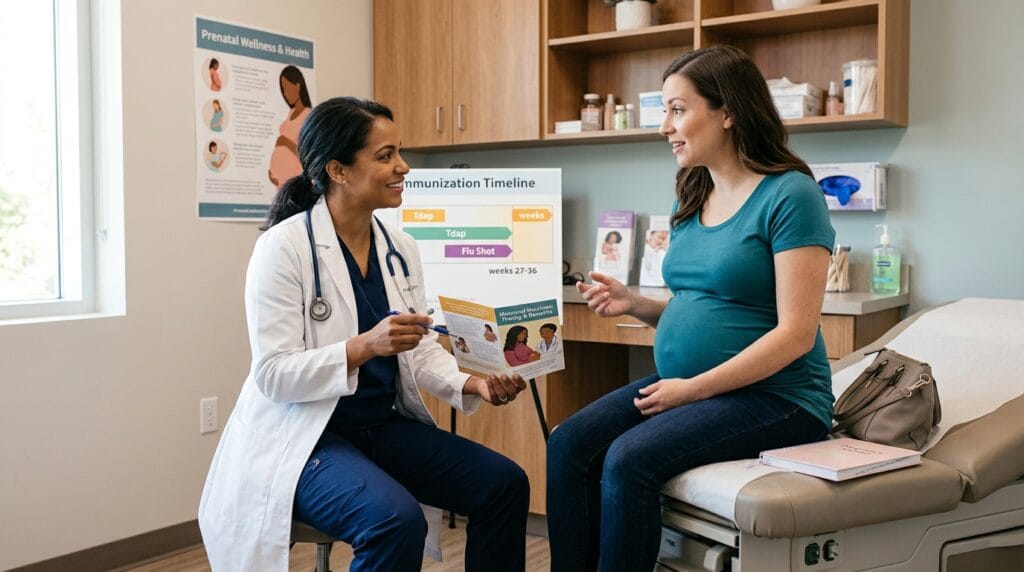
A good vaccine conversation starts before the appointment. Bring your vaccine record if you have one. If you do not, tell your provider what you remember. Include prior Tdap shots, flu shots, COVID-19 doses, RSV vaccination if applicable, and any past reactions.
Also share your medical history. Mention asthma, diabetes, high blood pressure, immune conditions, autoimmune disease, severe allergies, previous pregnancy complications, or current medications. These details help your provider personalize your care.
If you recently felt sick, had a fever, or were exposed to an illness, tell your care team. They can decide whether to continue with the plan or adjust timing. Do not hide symptoms because you feel embarrassed or rushed. Accurate information protects both you and your baby.
If you are unsure which questions to ask, keep the list simple. Ask: Which vaccines do I need during this pregnancy? Which ones should I get now? Which ones should wait? What side effects are common? When should I call you? Does my baby need any protection after birth?
How Vaccine Planning Fits With Other Pregnancy Health Topics
Vaccine planning is only one part of prenatal care. Your provider may also monitor iron levels, blood pressure, glucose screening, fetal growth, symptoms, mental health, and birth planning. These topics often connect. For example, severe fatigue may come from normal pregnancy changes, but it can also overlap with anemia, infection, poor sleep, stress, or other concerns.
If you feel unusually tired, review e-Pregnant’s article on iron deficiency in pregnancy. It explains why ferritin, anemia screening, and fatigue deserve attention. You can also ask your provider whether your symptoms fit normal pregnancy changes or need testing.
Vaccine questions may also connect with exposure concerns. For example, if you are worried about outbreaks, travel, school exposure, or unvaccinated contacts, tell your provider. e-Pregnant’s guide on measles and pregnancy in 2026 can help you understand why pre-pregnancy vaccine history and exposure prevention matter.
When to Call Your Provider Instead of Waiting
Call your provider if you have fever, shortness of breath, chest pain, severe weakness, signs of dehydration, reduced fetal movement later in pregnancy, a serious allergic reaction, or symptoms that feel worse than expected. Also call if you were exposed to a contagious illness and you are unsure what to do next.
Do not wait until the next appointment if something feels urgent. A short call can help your care team decide whether you need home care, testing, medication, monitoring, or an in-person visit.
The pregnancy vaccine schedule 2026 does not need to feel like a guessing game. Ask early, bring your records, discuss your trimester, and let your provider explain which vaccines apply to you. With the right plan, you can move through prenatal care with more confidence and less online confusion.
For trusted medical guidance, you can also review the American College of Obstetricians and Gynecologists resource on maternal immunizations during pregnancy. Use it as a starting point for questions, not as a substitute for your own prenatal care plan.